Airport Trees
Hey Collective,
I’m writing this month’s issue of The Current, not just as the founder of The Ōnda Collective, but from the perspective of being a Minnesotan who is currently both heartbroken and inspired by my home state. Do I stand with them? You betcha!
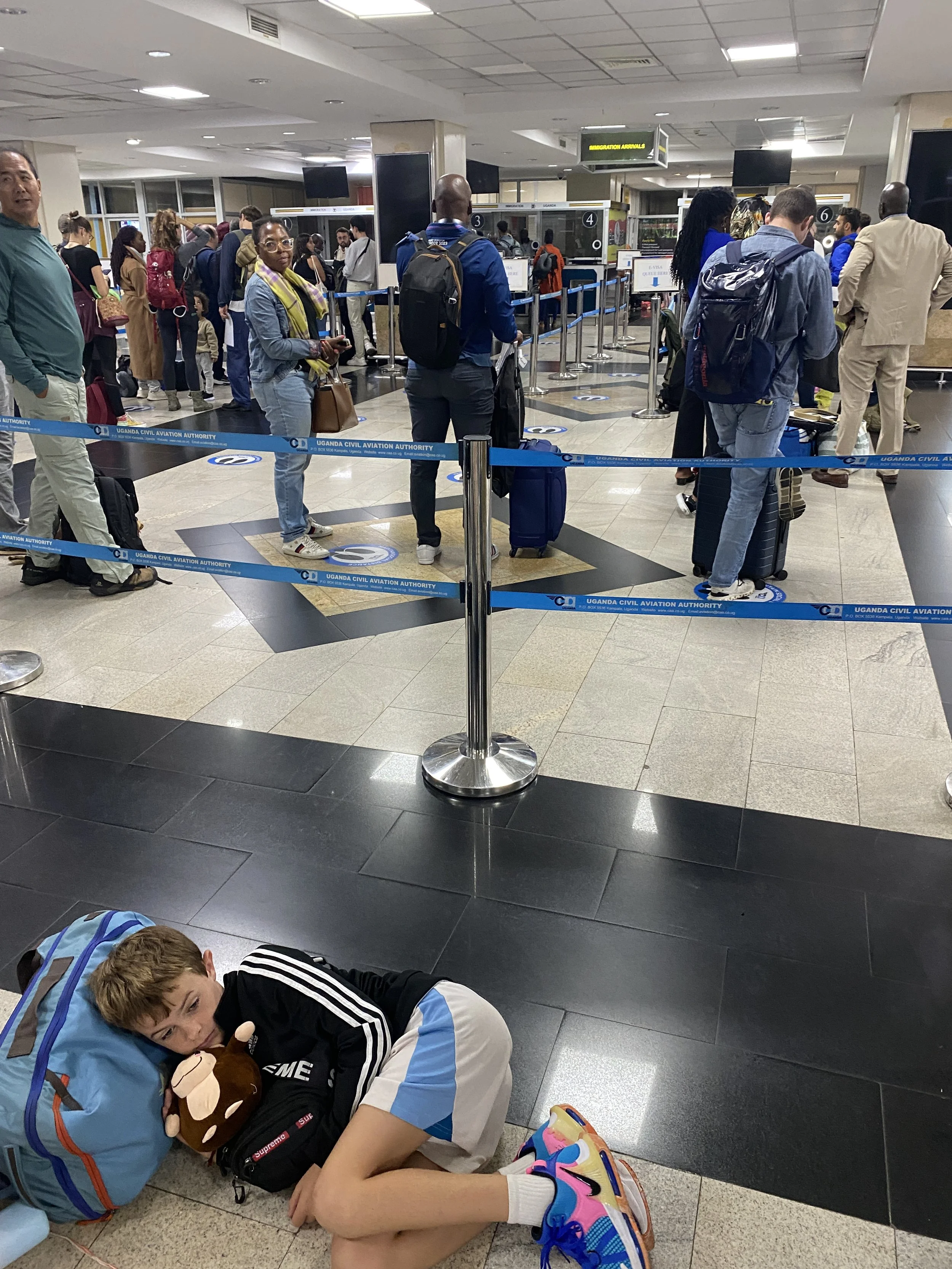
While my family was working our way around the world, we found ourselves in an international airport nearly every week. In total, we took 47 flights in 12 months.
Some airports were pristine and temperature controlled with marble floors and quiet efficiency. Others could have been mistaken as abandoned mechanic shops, overgrown by jungle and heat. Irrelevant of the environment, one thing was always true:
Every airport hummed at a baseline frequency of anxiety.

You know the vibe:
People sprinting in desperation toward a gate.
Arguments in mixed languages over visas and documents.
Frustrated parents trying to soothe a child who hasn’t slept in days.
Stress is contagious. And operating at that frequency, even temporarily, is exhausting.
And “airporting” wasn’t even a temporary activity for us; it was our way of life. We needed these transitions to be experiences of reset. So, at some point, we flipped our perspective and came up with an airport game. It’s much like playing Where’s Waldo:
We’d scan the concourse for people who were breaking the mold. These are the people who:
Moved slower.
Appeared to have their feet more planted.
Positioned their lips ever so slightly upturned.
We started calling these people airport trees 🌳.
Airport trees are the opposite of disconnected. They aren’t numbing with headphones, mindless scrolling, or even buried in a book. Instead, they are deeply present, aware, and perceptive.
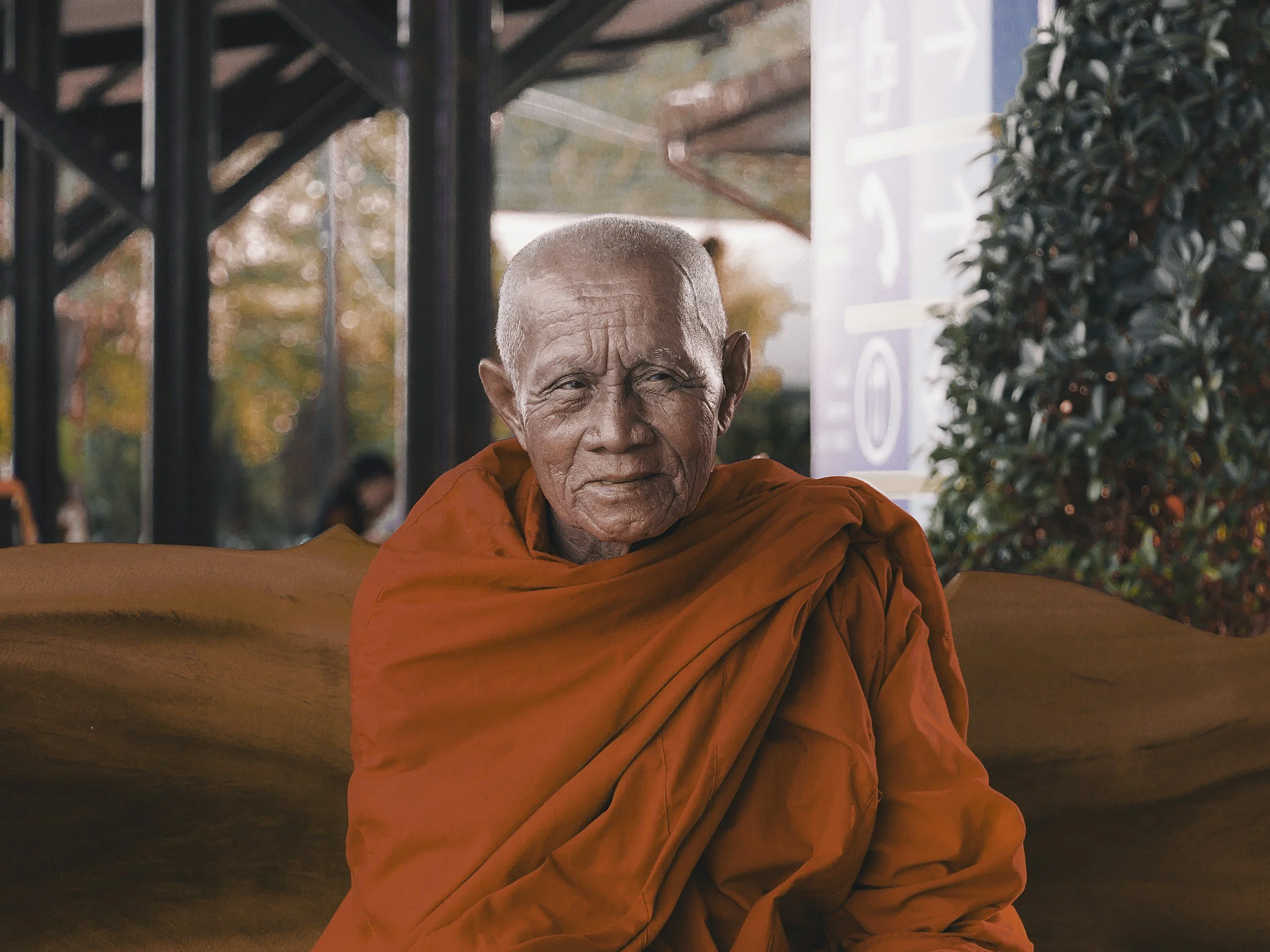
A barefoot monk in an orange robe is an unmistakable
airport tree
and an easy win at the game.
But they are a rare spot, especially in the western hemisphere.
Look deeper. You’ll likely encounter a person quietly kneeling to help gather the contents of a stranger’s exploded backpack. Or a grandmother gently rocking in line, maybe even gifting a wink to a bystander (this is my mom - the ultimate airport tree). Perhaps it’s a business traveler with an inviting softness behind his eyes.
Here’s the deal about airport trees:
They also miss flights.
They also have to overpay for a gross meal.
They also have to relinquish their 4oz bottle of expensive cologne because those additional .6 ounces became a “security threat”.
They also have to shove their carry-on into those metal sizing bins before they are allowed to board.
The chaos touches them too. But they respond differently.
Once you start looking for trees, you see them everywhere. You train your mind’s attention to pick them out without any effort at all. And you don’t even need to be in an airport to play the game.

I recently learned that there’s a name for this practice! It’s called moral elevation.
Moral elevation is the deliberate act of scanning your environment for goodness. For benevolence. For the helpers. When we witness moral beauty - someone stepping in to help, someone standing firm, or someone choosing kindness - our nervous system shifts. It actually counteracts the exhaustion we feel from the constant call to be compassionate. It reminds us that while the horror is real, so are the protectors.
The world right now holds so much uncertainty, injustice, and suffering. Just like the chronic tension in an airport, it’s all around us. In the midst of this constant uncertainly, so many of us in The Collective find ourselves wrestling with this question:
How can I allow myself to experience joy when so much suffering is happening around me?
Is joy naive?
Is it indulgent?
Is it a betrayal or hypocritical?
What do I do with the guilt I have for celebrating my child’s birthday or going out dancing with friends when [fill in this space] is happening around me or in this world?
Should I avoid posting or sharing that I had a fabulous weekend because it appears insensitive and insignificant?
This is where dialectical thinking enters. Dialectical thinking is the practice of holding two seemingly opposing truths at the same time. It’s finding home in the tension of a paradox. Here we are again… back to my favorite concept: the paradox.
The world is unjust AND there is breathtaking goodness.
We can rage at injustice and still experience love.
We can witness terrible despair AND feel a God(dess)-like awe in the same scene.
Both are real.
This is not toxic positivity. It is not looking away. It is, like the trees, being acutely aware of what is happening and choosing to respond differently thru noticing and being the moral beauty that is also part of the scene.
Joy, in this framework, is not escapism.
It is fuel.
Without it, we burn out. We numb. We collapse under the weight of constant and unsustainable empathy. Moral elevation is what helps us build the resilience required to stay engaged and keep loving thy neighbor.
Minnesota will always be home to me. And one thing deeply rooted in Minnesota culture is that it is full of trees. These are the people who show up with casseroles. Who shovel a neighbor’s sidewalk when it’s 20 below. Those who stand firm in kindness and action even when faced with unfathomable tragedy.
They are aware of hardship AND they are choosing their frequency.
They are actively demonstrating that we can acknowledge suffering and still reach for joy.
In fact, we must.
Because the world does not need more anxious airports.
It needs more trees.

Your Turn:
Pick a prompt that jumps out to you and explore this month’s theme for yourself:
Who are the trees in my world right now? Do they need to hear that their steadiness is creating a ripple effect of positive change?
Where can I practice being a tree today or this week? How does it feel when I elevate my frequency in this way?
What if I begin to think of joy not a betrayal to those who are suffering, but as a responsibility to them?
What would it look like to let joy and peace coexist with my grief and anger this week?
Where in my life am I being invited to hold two truths at once?
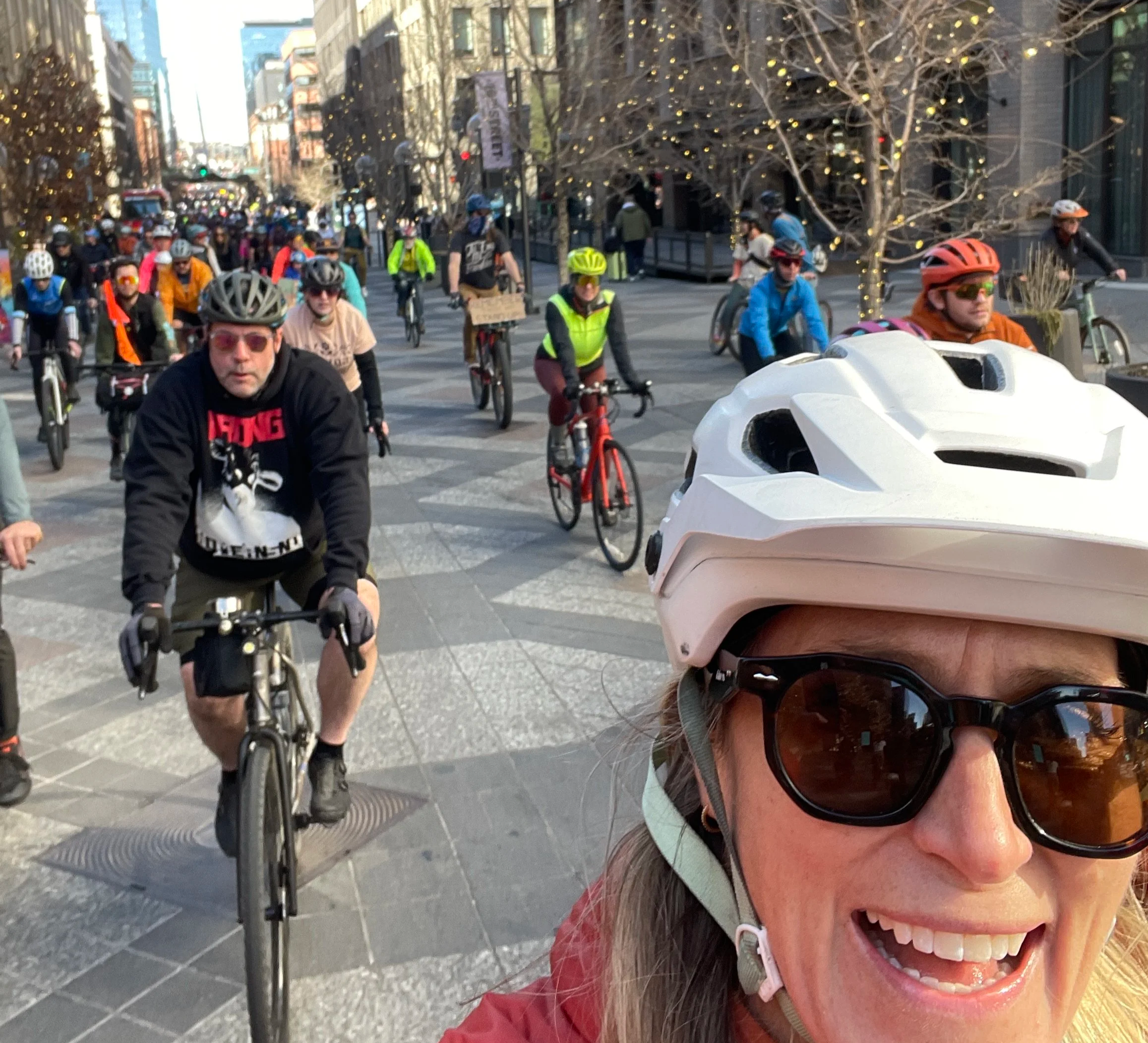
Denver bike gathering and protest to honor those we’ve lost and stand up for what’s right.
Thanks for being here friends. For forming The Collective. For being the trees in my life and the lives of those around you. I know it’s so hard. I feel it too.
Let’s not forget Margaret Mead’s wisdom: “Never doubt that a small group of thoughtful, committed citizens can change the world; indeed, it's the only thing that ever has.”,
and let’s keep this ripple going. As a Collective.
With so much love, (and grief, and joy, and anger, and helplessness, and hope, and awe and… you get it),
Daniela
Daniela Young, MS, CGC
Founder, The Ōnda Collective